Or rather, your Didion for today. Here is her fictional self in the 1984 novel, Democracy, about a crisis in a powerful political family. There is a murder, an affair, and all the jaded decadence of the 1970s. This being vintage Didion, there's also a great deal of worrying about form: Aerialists know that to look down is to fall. Writers know it too. Look down and that prolonged spell of suspended judgment in which a novel is written snaps, and recovery requires that we practice magic. We keep our attention fixed on the wire, plan long walks, solitary evenings, measured drinks at sundown and careful meals at careful hours. We avoid addressing the thing directly during the less propitious times of day. We straighten our offices, arrange and rearrange certain objects, talismans, props. But Democracy is not just a novel about writing a novel. It's also about Inez Christian Victor, a tired Hawaii-born wife of a liberal politician at the end of the Vietnam War. The kind of woman whose entire existence can be summarized in an arch yet plaintive line from Didion: "In retrospect she seemed to have been most happy in borrowed houses, and at lunch." It's also a novel about writing a novel in Hawaii, something we should all be lucky enough to do. They had met in Honolulu during the winter of 1952. I can define exactly how winter comes to Honolulu: a kona wind comes up and the season changes. Kona means leeward, and this particular wind comes off the leeward side of the island, muddying the reef, littering the beaches with orange peels and prophylactics and bits of Styrofoam cups, knocking blossoms from the plumeria trees and dry fronds from the palms. The sea goes milky. Termites swarm on wooden roofs. The temperature has changed only slightly, but only tourists swim. At the edge of the known world there is only water, water as a definite presence, water as the end to which even the island will eventually come, and a certain restlessness prevails.
Mad Men sent Don and Megan to the Royal Hawaiian for the season 6 premiere yesterday. And Don, like Didion, came away from his winter holiday thinking that Hawaii was all about death. "Heaven's a little morbid," he tells the Sheraton guys, in one of the few scenes that wasn't completely boring. "How do you get to heaven? Something terrible has to happen." If only he'd run into Didion, they could've stood together with their cigarettes, enigmatically watching tourists swim.
My essay on Lynne Sharon Schwartz's lovely new novel Two-Part Inventions (Counterpoint) is online now at the Paris Review Daily. Also discussed: the Bennington MFA, artistic mentorship, and the experience of reading a teacher's books.
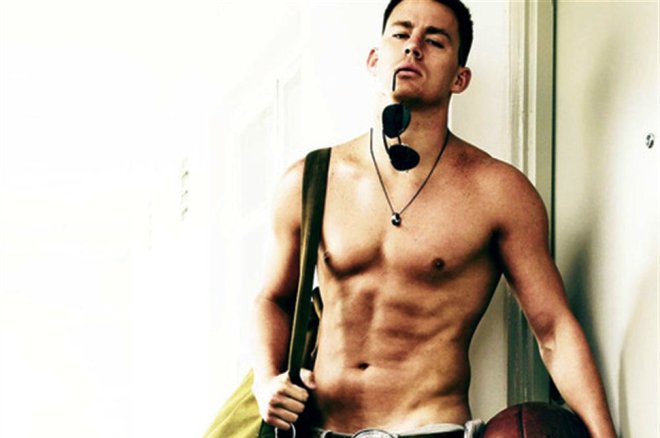
In the run-up to Oscar Sunday, the good people of The Iron List (that's, um, my husband Matt Karp and me) have wasted a good portion of the week evaluating the films of 2012, because this is something you do for a billion years or not at all. If you have ever wondered what we think of Tom Hardy's turbo-neck, Charlize Theron's push-up form, and Channing Tatum's helicopter dance, not to mention the comparative violence of orca whales, American empire, and dying slowly at home, well, now you know. Scroll back through all the posts for the opinions of our valued friends and colleagues as we discuss the additional themes of high school reunions, bromance, public urination, and children in peril. Sometimes garbage flew in our face, but on the whole, we had a really good time.
A visit to Commonwealth Books in Boston yesterday yielded four used paperback novels: George Eliot's Felix Holt: The Radical, Joseph Conrad's Nostromo, Frank Norris's The Octopus, and Natalia Ginzburg's The City and the House. To pass time on the T ride home, we read the first sentence of each, not expecting them to have much in common. "Five-and-thirty years ago the glory had not yet departed from the old coach-roads; the great roadside inns were still brilliant with well-polished tankers, the smiling glances of pretty barmaids, and the repartees of jocose ostlers; the mail still announced itself by the merry notes of the horn; the hedge-cutter or the rick-thatcher might still know the exact hour by the unfailing yet otherwise meteoric apparition of the peagreen Tally-ho or the yellow Independent; and elderly gentlemen in pony-chaises, quartering nervously to make way for the rolling swinging swiftness, had not ceased to remark that times were finally changed since they used to see the pack-horses and hear the tinkling of their bells on their very highway." George Eliot, Felix Holt
"In the time of Spanish rule, and for many years afterwards, the town of Sulaco--the luxurious beauty of the orange gardens bears witness to its antiquity--had never been commercially anything more important than a coasting port with a fairly large local trade in ox-hides and indigo." Joseph Conrad, Nostromo
"Just after passing Caraher's saloon, on the county road that ran south from Bonneville, and that divided the Broderson ranch from that of Los Muertos, Presley was suddenly aware of the faint and prolonged blowing of a steam whistle that he knew must come from the railroad shops near the depot at Bonneville." Frank Norris, The Octopus
"My dear Ferruccio, I booked my ticket this morning." Natalia Ginzburg, The City and the House
Of course, each one was its own unique sentence -- just compare the lengthy Eliotness of Eliot with the epistolary brevity of Ginzburg -- and yet, in a way, they were all the same. Eliot and Conrad make explicit acknowledgment of changing times; Eliot, Conrad, and Norris offer a flavor of commerce and emerging technologies; and in all four, there a presumption, if not an outright declaration, of travel. Eliot has the coach-road, Conrad the port, Norris the county road and railroad, and Ginzburg the ticket.
It's a reminder, however superficial (because after all, this was a subway game, and I haven't yet read any further), that fiction thrives on movement: of language, of action, of people. It's an old, facile dichotomy that there are two plots in fiction (a hero goes on a journey, and a stranger comes to town) which is a little too cute. And yet, when someone or something is going somewhere -- when a president heads to the Capitol to embark on another four years -- isn't it true that we can't help but wonder why, or how it will all turn out?
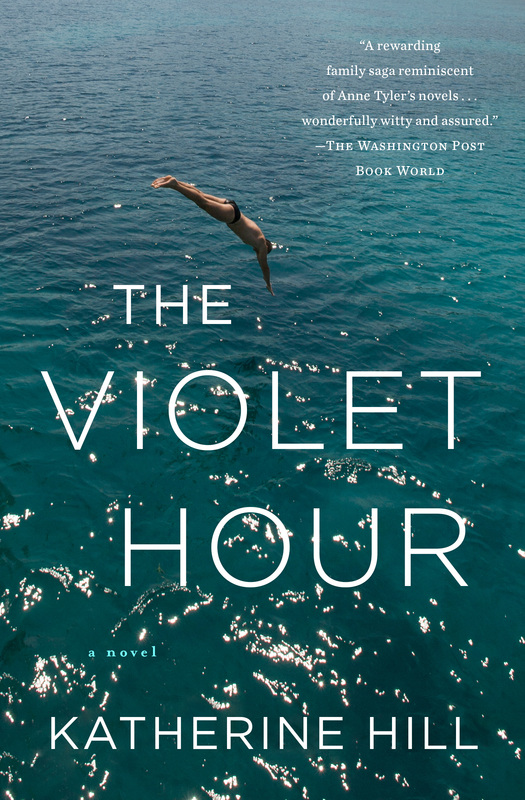
When Courtney Elizabeth Mauk invites you to participate in a literary blog chain called The Next Big Thing, you do it. Even if it means answering a bunch of scary questions about the thing you’ve been working on all these years… Courtney is the author of Spark, a fabulous novel about arson and siblinghood, which was published by Engine Books last fall. She’s also basically the nicest person you’ll ever meet. (On Twitter @courtneymauk.) Thanks for the invite, Courtney! Here goes nothing… What is your working title of your book (or story)? The Violet Hour What is the one-sentence synopsis of your book? One summer afternoon in San Francisco, a rheumatologist and a sculptor out for a sail with their Harvard-bound daughter plunge into a fight that will change the course of all their lives. What genre does your book fall under? novel, literary fiction Where did the idea come from for the book? I’ve always been interested in intimacy—how fragile it can be and how irrationally strong. But looking back, there was a college seminar I took called “Doomed Love in the Western World” that was probably pretty important. We read about a dozen great novels, including Madame Bovary, Anna Karenina, and The Satanic Verses, and for a long time after that, everything I read seemed to extend the conversation of that class. Whatever else was going on the in world, love just kept finding creative new ways to die. For some reason, probably because I’m a hopeless romantic, that idea really excited me. Which actors would you choose to play your characters in a movie rendition? The most attractive ones, of course. Honestly, I think about celebrities far too often to answer this question without surrendering all dignity. But if pressed, maybe Julianne Moore, Emma Stone and George Clooney. Or three fabulous actors no one has ever heard of! Yes, that. How long did it take you to write the first draft of your manuscript? The first draft took me about four years. Then I spent the next three years revising. Who or what inspired you to write this book? Virginia Woolf. Jonathan Franzen. Oh no, if I keep going this will be like roll call at graduation. Really, just about everyone I’ve ever read. Nothing inspires me more than an ambitious writer tackling an ambitious subject like love, loss, time—or ambition. That, and fear. I’d told so many people I was working on this novel that I think I felt I just had to finish it. What else about your book might pique the reader's interest? A family-run funeral home in Bethesda, Maryland, plays an important role in the action. Will your book be self-published or represented by an agency? Thanks to my hero Jim Rutman at Sterling Lord Literistic, The Violet Hour will be published in July 2013 by Scribner in the US and Canada, Viking/Penguin in the UK, and Ullstein in Germany. I know. I can’t believe it either! Up next week are three writers I really, really like. As people and as writers. Basically, I did this just to get them all to talk, because I'm dying to hear what they're working on. Laurie Ann Cedilnik. Fiction Editor at Third Coast. Assistant Fiction Editor at Barrelhouse. Queens girl for life. On Twitter @cedilnik. Tom McAllister. Author of Bury Me in My Jersey: A Memoir of My Father, Football, and Philly. Nonfiction Editor at Barrelhouse. Co-host of Book Fight podcast. On Twitter @t_mcallister. Ross Simonini. Interviews Editor at The Believer. Member of NewVillager. On Twitter @RoosShamanana. Check back next week for their answers.
It's been a pretty good year. Better than average. My novel found a publisher. A good one. My historian found a job. Also a good one. Which is probably how you know that the Mayans might've been off by a few days, but were otherwise totally right.
So before the world ends, I figured I'd better summarize the Year in Reading.
I got a Kindle. I finally read Infinite Jest. These things are not unrelated.
I got a frequent buyer card at Harvard Book Store. I vowed never to buy another book from Amazon, cancelled my Rewards Card, and continued to feel mega-guilty about my Kindle. These things are not unrelated.
Yet despite all the book buying, it was a fairly frustrating reading year. Where was the transcendence? Where were the books that showed me the world as I believed it but had not yet recognized it to be? Of course it's possible that as my own book gets closer and closer to being born and as I grow tougher and tougher on it, I am also growing tougher on every other narrative I encounter. That would be one vaguely positive, and entirely self-justifying, way to spin it.
Regardless, here are my scattered highlights.
Mountains ConqueredUnderworld, Don DeLillo Bottom line is I loved Underworld: creation and waste and mushrooms, neighborhood life in 1950s Bronx, J. Edgar Hoover and Lenny Bruce, the trajectory of a single (perhaps apocryphal) baseball. The central character, Nick Shay, is -- honestly, I have no idea what he is or why his emotional flatness should be so interesting to DeLillo -- but it's the vignettes about everything else in the Cold War United States that really keep the novel going, and they are moving and intelligent and gorgeously layered, so really, who cares about Nick...? Infinite Jest, David Foster Wallace Infinite Jest on the other hand? I wrestled with this gorgon for about three months, took lots of breaks, got annoyed at syntax, got angry at mood, and now it's all I can think about. Distracting pharmacological notes aside, I feel I understand a lot more about addiction than I ever did before and I feel grateful for the character of Don Gately. But I also feel that this book never let me get a word in edgewise and for all its effort to make me feel it often just left me cold. I feel it's too much of one thing (despairing, isolating pain) and not enough of all the other things (especially joy in other people) that make up the infinity of human experience. I feel I need to educate myself a lot more to form a considered appreciation of this undeniably major late 20th century American work, cast off all my formal and stylistic prejudices, and etc etc and so on. But I also still feel that I never want to read another suicide by microwave and that everything to do with Quebecois separatist wheelchair assassins is really, really stupid. So maybe I still have some growing to do as I enter 2013? I can only hope. I really do want to grow. Most OverduePersepolis, Marjane Satrapi Sometimes there are no words so you have to draw a black box. This graphic memoir of the Iranian Revolution really does live up to the hype.(Also, a great antidote to the America-centric story in Argo.) Most TopicalWe Need to Talk About Kevin, Lionel Shriver An exceptional novel, culturally daring and intellectually sharp, about the mother of a disturbed adolescent who commits a terrible crime at school. Several months back, I read it as a brilliant allegory for the terror of American parenthood in an individualistic and politically divided society. I still read it that way, though the events described remain far too real and unresolved. Most OriginalLeaving the Atocha Station, Ben Lerner Perhaps a self-loathing, self-medicating poet's meditation on his alienating year abroad doesn't sound terribly original. Or fun. But Lerner's first novel, about a poet like him named Adam who spends a fellowship year in Spain, is at once clever, curious, hilarious and sad. How can a privileged, accomplished American have anything genuine or valid to say about the terribly ugly real world? Adam starts by taking drugs and going to the Prado. The rest unfolds from there. Biggest TreatsThe Marriage Plot, Jeffrey Eugenides When I read this at the beginning of 2012, I didn't know enough about David Foster Wallace to see any resemblance to Leonard. He was just Leonard to me -- a brilliant, mentally ill guy in love -- which, whatever his source of inspiration, was surely what Eugenides intended. Likewise Madeline was just Madeline and Mitchell just Mitchell: three Ivy League graduates educated in theory on the cusp of becoming real. Look at Me, Jennifer Egan After A Visit from the Goon Squad, I was an Egan convert. Her language, her sharp vantage on American culture, her ability to create a book that encapsulates all that is written and all that is not. I needed more more more. But I'm a savorer, so I only allowed myself one this year. Look at Me was it: about the post-industrial Midwest, and high-fashion Manhattan, and a masochistic model whose face is never quite the same after a devastating car crash. Best Alternate HistoryPym, Mat Johnson What if Edgar Allen Poe's one novel, The Narrative of Arthur Gordon Pym, were actually inspired by a true story? And what if you were an embittered black academic who was just denied tenure for refusing to teach African-American literature, and what if you discovered a slave narrative linked to Pym that might resurrect your pitiful career? Obviously, you would set sail for whitest Antarctica with an all black crew and hundreds of Little Debbie cakes only to get yourself enslaved by a brutal race of foul-smelling abominable snowmen. "Turns out though that my thorough and exhaustive scholarship into the slave narratives of the African Diaspora in no way prepared me to actually become a fucking slave." Ha! Johnson's novel is high satire -- of the academy, of art, and of course of racial politics, the Atlantic World's enduring irresolvable theme. Article That Spoke Most Directly to My Heart"Some Notes on Attunement," Zadie Smith, The New Yorker, 12/10/12 On Joni Mitchell, emotional evolution, and not being a connoisseur. God, I can't wait to read NW.
When I was in growing up, my parents had HBO. The local college library was good for classics like National Velvet and all manner of screwball Lily Tomlin comedies, but if you really wanted to keep up with current releases, like Mary Shelley's Frankenstein, the 1994 effort of my then-favorite director Kenneth Branagh (yes, really), then HBO was your source.
Things I learned from Branagh's Frankenstein: 1) Who Robert DeNiro was. (Actually, I may have learned that from Cape Fear a few years earlier...) 2) Frankenstein is the scientist not the monster. Everyone has this realization at some point. Mine I owe to shirtless Branagh. 3) It would really, really, really suck to be falsely accused of murder. Especially if the punishment is being thrown off a dizzying tower with a noose tied around your neck.
Having just (belatedly) read the novel for the first time, I'm pretty tempted to revisit that no doubt outrageous, action-packed film, but for now, a completely different movie comes to mind -- in part because Frankenstein the novel is less action-packed than I might've expected. Big moments like the animation of the creature and Victor's wedding receive but one sentence. Murders happen primarily off-stage and are told back to us in (mostly) bloodless summary. When Shelley does indulge in long descriptions, they usually address the creature's plight in a hostile world, Victor's anguish over his own hubris or, true to the Romantic movement, the awesome natural world around them.
On one of his many perambulations, on which he broods over What He Has Done, Victor encounters the shimmering Swiss mountains of his youth: "The Alps, whose white and shining pyramids and domes towered above all, as belonging to another earth, the habitations of another race of beings."
"Another earth," of course, calls to mind Mike Cahill's 2011 film of the same name, in which a young woman named Rhoda dreams about starting over on Earth 2, a twin body that has suddenly appeared in the sky over our own planet. Like Victor, Rhoda has some blood on her hands, and like him, she experiences paralyzing remorse. What better way to purge that guilt than to enter a parallel universe, a majestic one you can see from the bleak place you inhabit now, where none of your crimes exist? It's an irresistible fantasy -- to escape and start fresh as a better version of yourself who would never, ever destroy a life.
Is it relevant here to mention that Mary Shelley was pregnant when she wrote that line? I think it is.
What's more, having just returned from Seattle, where clouds do fun things to mountains, I can affirm that snowy peaks really do often look like perfect castles in the sky.
All of a sudden, the school year is winding down at Mighty Writers. I can now count the number of days I have left in the studio on one hand, and that just makes me feel miserable. Where am I going to go in July to read the clever poetry and space capers of Philadelphia middle schoolers? Who's going to play with my hair on Tuesday afternoons? I was honored to be Volunteer of Month for May, and I'm wracking my brain to figure out how to stay involved from Boston next year, and from Jersey thereafter. In the meantime, if you live in Philly, like kids okay, and care deeply about improving literacy in our city, please think about volunteering your time when Mighty Afterschool starts up again next fall. You won't regret it. If you have long hair, you might even get it braided. Evelyn and Zipporah hard at work, despite paparazzi efforts to distract them.
For some reason, April has been the month of charitable writer friends asking me to join their recorded conversations. And for some reason, adolescence continues to be the organizing theme. Having recently come to suspect that I was at my smartest as a 16-year-old in AP English, I was more than eager to revisit those awkward halcyon days on a panel for The Common magazine at the Kelly Writers House and on Barrelhouse magazine's wildly successful (and Sam Lipsyte-endorsed) Book Fight podcast. By all means, have a look/listen. Then see if you agree with me that I say "right, right" WAY too much when other people are talking.
Thanks to Iron Husband Matt Karp, the movies of 2011 occupied most of my blogging brain in recent months (see the fruits of those labors over at the Iron List). But I've been reading, too. Not as much as I would like, but enough to blab about it for a little while here. First up, The Art of Fielding by Chad Harbach, which, a few debatable plot points aside, really is that good. I mean, I read that thing jealously in every sense of the word -- wishing people would leave me alone and just let me read, wishing I'd written it myself. Damn him. I guess I understand why it might be a hard sell for some readers: there's really only one female character, and there's a LOT of stuff about baseball. But Harbach succeeds where so many otherwise talented sports novelists fall short (I'm looking at you, Richard Ford); he really captures the experience of the athlete. Not just the punishing work-outs, the throbbing knees, and the pain of losing (though that's all beautifully, viscerally there), but also the rare single-mindedness of athletic pursuit -- the rather extraordinary (and also rather limited) way that the best athletes can deafen themselves to background noise, suppress interest in other human activities, and make an entire life of one motion, performed again and again and again. While transcendence is what everyone's after, Henry Skrimshander is remarkable for his narrowness, Mike Schwartz for his tolerance for pain. So, OK, yes, I'm sucker for jocks, but baseball is not my sport. In fact, my apathy borders on hatred: those long games, that long season, those stupid uniforms with those embarrassing belts. Why watch a misshapen guy stand around in the outfield when you can watch Dwyane Wade unleash himself for a steal and a rearing, hurtling fast break? But Harbach made me kind of like baseball, and that may well be a literary triumph in itself. Leaving the Atocha Station was another literary darling of 2011, and another take on ambition. It's a slim novel by the young poet Ben Lerner about a self-loathing, over-medicated young poet on a prestigious fellowship in Spain. I assume it's autobiographical, because, among other coincidences, both the author and the narrator, whose name I can't remember, are from Topeka, and son to a famous feminist psychologist. (Having worked on Harriet Lerner's backlist in a past life, this particular coincidence pleased me to no end.) The book looks and feels like a monograph you're forced to read for a sociology course, but otherwise, Coffee House Press did very well by it. This is a delightful, chastening novel about personal and political anxiety and the perils of trying to speak Spanish when you can't. Highly recommended. And then, of course, there's Stewart O'Nan, who gets ordinary American life better than almost anyone. It's incredible how much he notices. He takes care to refer to the "ass-end" of the dishwasher, which I can only assume is exactly what a Red Lobster line chef would call it ( Last Night at the Lobster). He can build an entire chapter around the mysterious appearance of spray-painted numbers on a sidewalk, and the breathless manner in which an older woman harps on it to her grown children, though she knows that neither one cares ( Emily, Alone). He can capture the exact cranky feeling of standing in line in the cold on vacation ( The Odds). I read all three of these treasures in the past few months, and I can't stop being impressed with O'Nan. He's a writer who makes characters and story out of details so mundane, most other writers would just as soon skip them -- which turns out to be those other writers' loss.
|